Dysart Ranchettes
Leak Detection in Dysart Ranchettes
Leak Detection in Dysart Ranchettes from an estimated $150. The leak you cannot see, located and marked — with any repair quoted afterward as its own job.
- An estimated range given before anyone visits
- The free meter test explained on the call
- The leak marked, with the readings written down
What a visit includes
- Meter test done with you
- Each system isolated in turn
- Leak marked, findings written down
Estimated visit$150‑400
Local crew
Local to Dysart Ranchettes, not a franchise call center
Local knowledge
Bigger lots and mixed ages, out west
Detection, scoped before priced
The finding written down, not a summary
Arizona ROC
License number on every written quote
Dysart Ranchettes
Leak Detection in Dysart Ranchettes: what actually fails
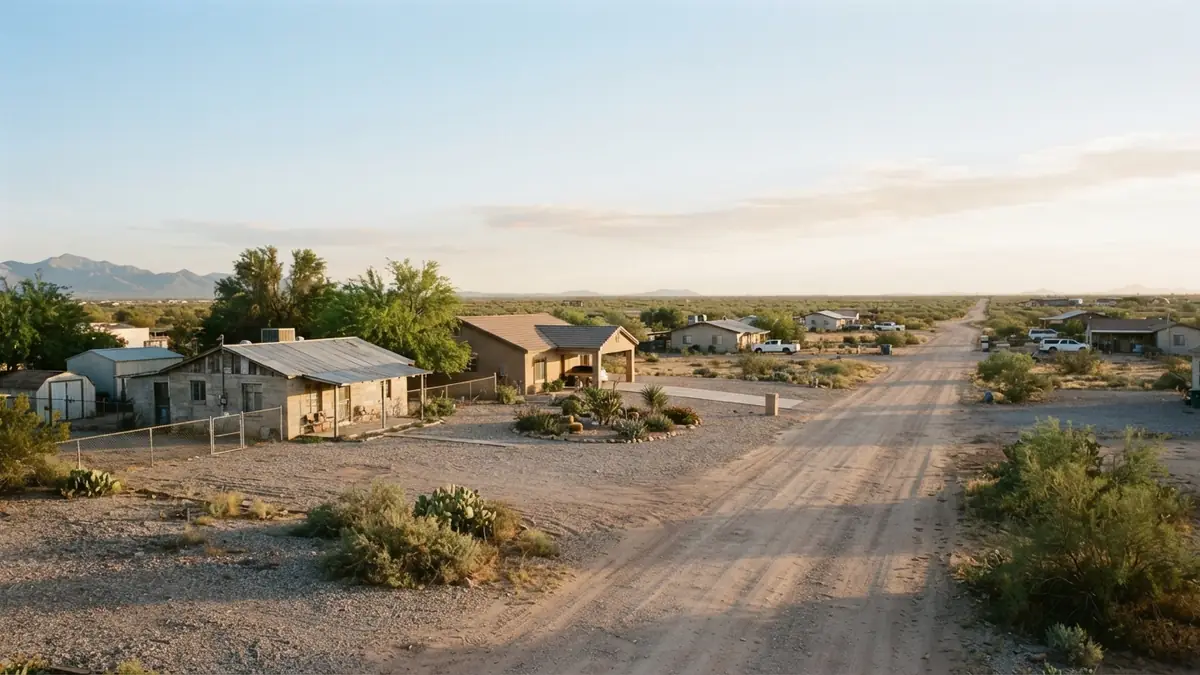
Dysart Ranchettes is larger lots in west El Mirage toward the Surprise line, built from the 1970s onward, and it is where the rest of this site's same-age reasoning stops working. A house here may be a generation older or younger than the one next door, and a bigger parcel means more buried line between the street and the house and out to anything else on the property — a shop, a second hose line, a pool added later. Leak detection in Dysart Ranchettes therefore starts by establishing what is in the ground and where it runs, then separates each of those runs before anything is listened to. A long line under open ground is harder to hear than a short one under a driveway, so a quiet leak out here is more likely to need tracer gas pushed through it. And with the meter a long walk from the house on some lots, the shutoff test goes faster with one person at each end and a phone between them.
Detection on a house is an estimated $150 to $400 across the industry. No verified El Mirage average exists and none is printed here. What moves the figure is how many systems have to be ruled out — house, irrigation, pool, the buried supply — before the search narrows to one.
- Every buried run on the parcel located before testing
- Lines to a shop, a pool or a far hose point separated
- Build year asked, never inferred from the house next door
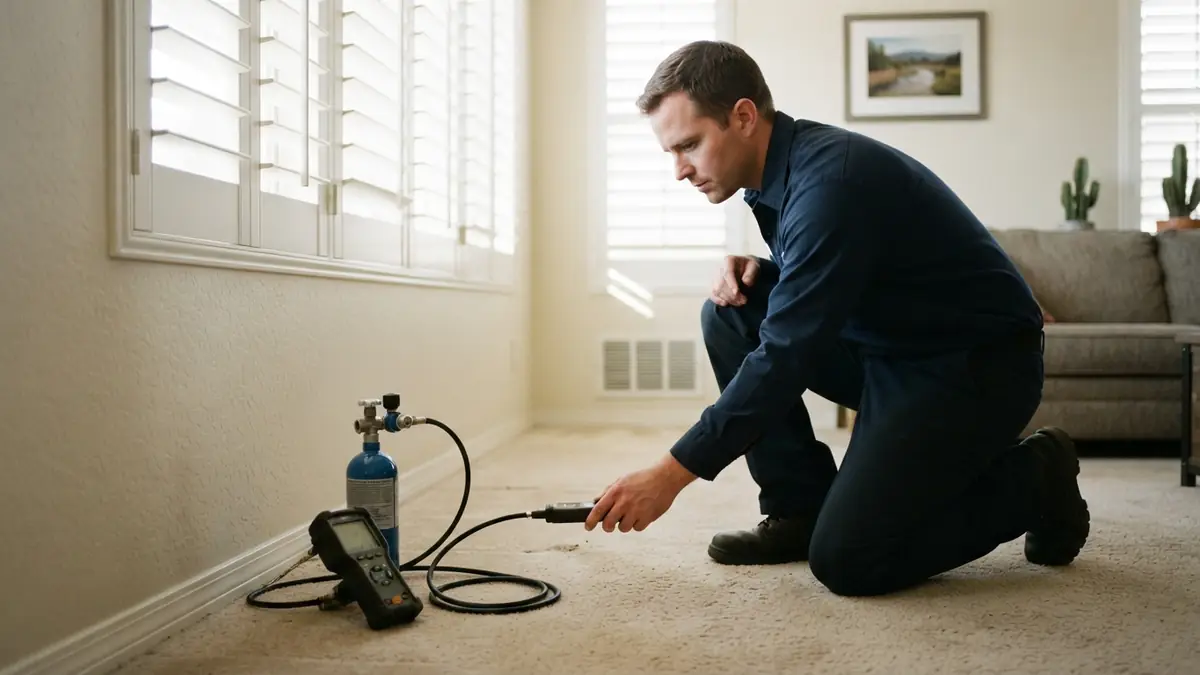
- Tracer gas ready for a long run too quiet to hear
Bigger lots, mixed ages. Map the ground first.
What happens
What happens during Leak Detection in Dysart Ranchettes
Each one takes a whole system out of the search.
- 1
Confirm the loss on the meter
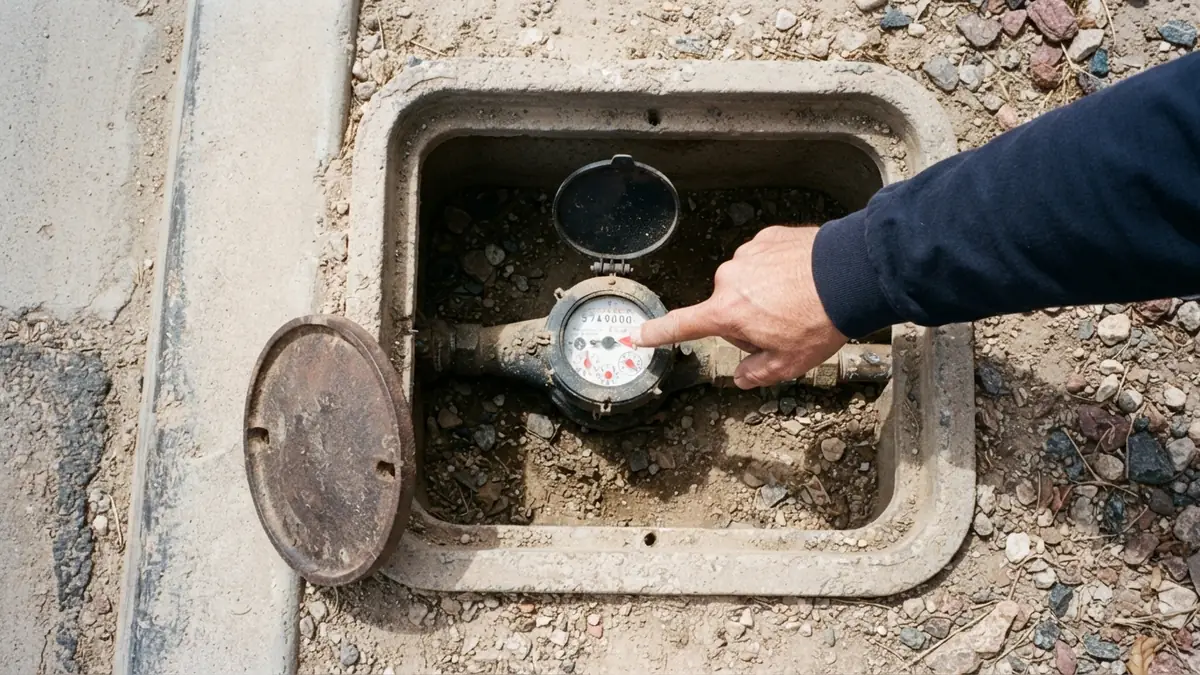
With everything off, the meter's leak dial is watched and timed. That gives a rate, and a rate says roughly how large the loss is before anything else is touched.
- 2
Split inside from outside
- 3
Separate hot from cold
- 4
Listen, then mark
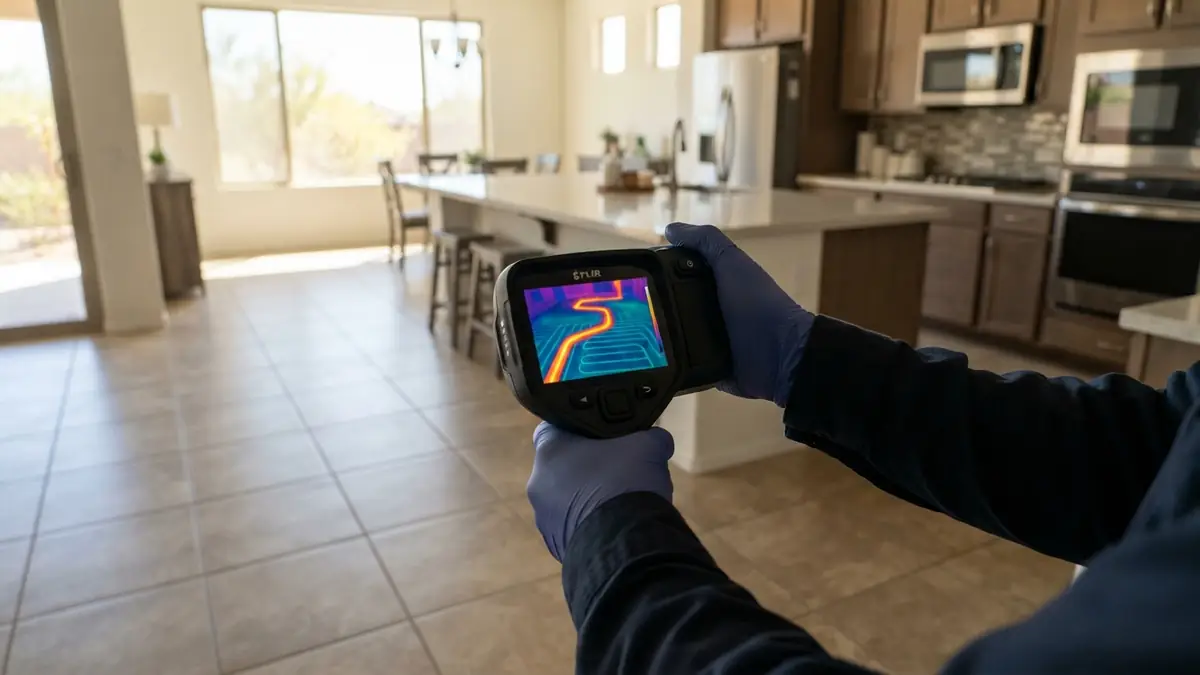
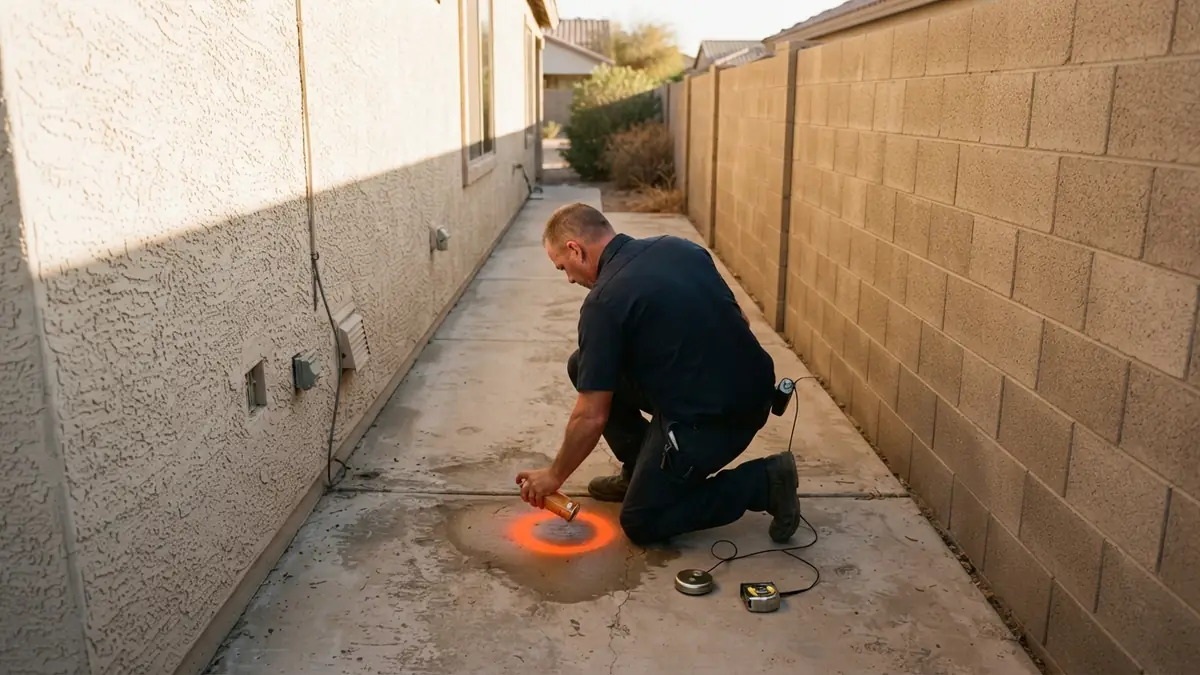
Only now do the ground microphone and the other instruments come out, on the one line still losing water. The spot is marked on the surface and the reading is written down.
Dysart Ranchettes
Leak Detection in Dysart Ranchettes: what is different here
The tract logic does not hold out here. Adjoining houses may be twenty-five years apart, and a bigger parcel puts more buried pipe between the street and the house and out to anything else on the lot, so the first job is finding out what is actually in the ground.
Nobody here should assume their neighbor's plumbing resembles theirs. The build year and anything added since — a shop, a second hose line, a newer pool — are the first things we ask.
- Estimated range, detection
- $150‑400
- City wells, all groundwater
- 9
- Hardness, per city reports
- 4‑9 gpg
Costs
What Leak Detection in Dysart Ranchettes costs
The estimated range covers the visit itself: the meter test, isolating each system, the instruments and a written finding. It does not include the repair, which is quoted on its own once the spot is known.
Leak Detection
$150 - $400
Estimated - same or next workday
- Wear parts ruled out before the slab
- Each system isolated on its own
- The spot marked, with the readings
- Repair quoted as a separate job
Emergency Leak Detection
$150 - $400
Estimated plus after-hours - same day where water is running now
- Told on the call if it can wait
- Shutoff talked through before we leave
- City-side water sent to the city
- Same estimated range, plus after-hours
Slab Leak Detection
$150 - $450
Estimated - same or next workday
- Hot and cold separated first
- Nothing opened to look
- One spot marked on the floor
- Repair options quoted separately
Every figure here is an estimated range. Your own number comes as a written quote, agreed before any work.
The route
From first call to finished: Dysart Ranchettes
Wear parts ruled out first, the leak marked, and any repair quoted as a separate job.
- 1
Run the meter test before the visit
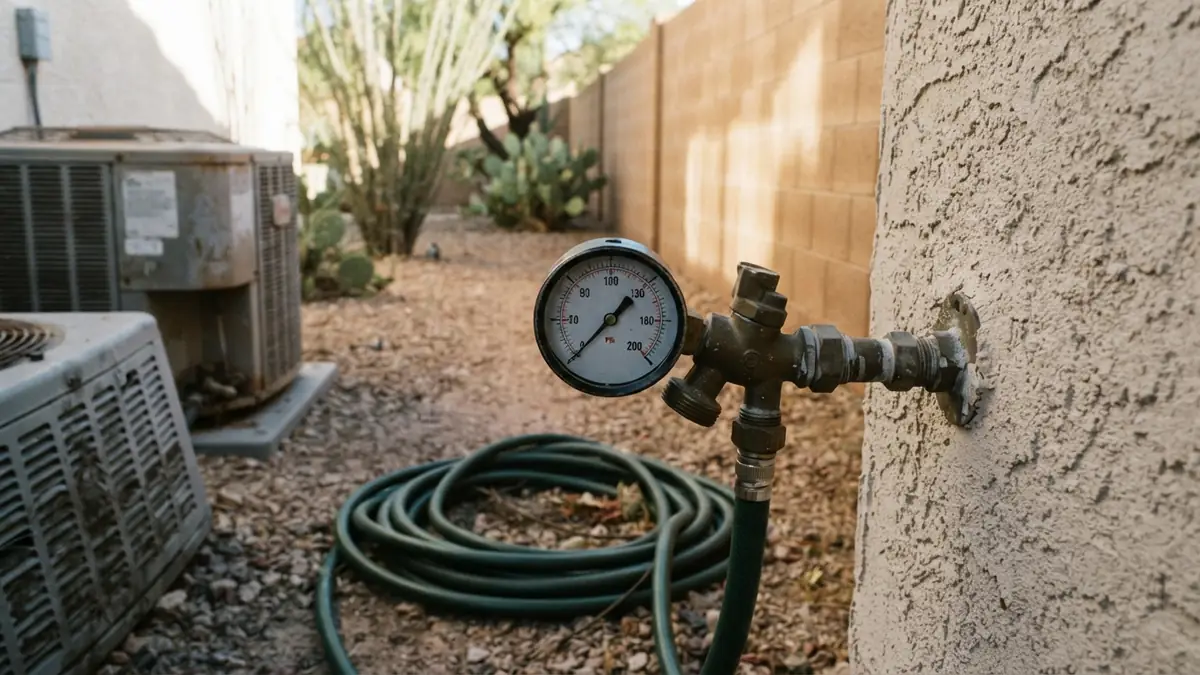
Shut every fixture, set the sprinkler controller to off and pause any pool autofill. If the meter's small leak dial creeps, something is drawing water. If it sits dead still at two checks an hour apart, the odds swing toward the bill or the reading rather than a pipe.
- 2
Tell us the year and the plan
When the house was built, roughly how big it is, and whether it has a pool or a drip system. In a city built this quickly, the build year is a fair guide to how old the original valves and connections are.
- 3
We isolate one system at a time
House, irrigation, pool and the buried supply are separated with valves and gauges, one by one, so the search is confined to the system that is losing water before any listening or thermal work begins.
- 4
The spot is marked and written up
You get the location marked, the readings and the method that found it, and what the repair is likely to involve. The repair is a separate quote, and the written finding is yours to take to any plumber you choose.
Need Leak Detection in Dysart Ranchettes?
The leak you cannot see, located and marked — with any repair quoted afterward as its own job.
Coverage
Where in Dysart Ranchettes we work
The number of buried runs on the lot moves the estimate most in Dysart Ranchettes. One line from the street to the house is an ordinary visit; lines out to a shop, a pool or a second hose point each add a run to isolate and listen along. A run that has to be traced with gas rather than heard takes longer again, and the estimate says which is likely before anyone drives out.
Questions
Questions about Leak Detection in Dysart Ranchettes
Something not covered here?
Put it to us by phone. Plain answers, an estimated range and nothing to sign.
Call (623) 284-0838How do plumbers detect hidden leaks?
By isolating first and listening second. Valves and gauges narrow the house to one system — inside or outside, hot or cold, house, irrigation or pool — and only then do the ground microphone, the thermal camera or tracer gas come out, on the one line still losing water.
What is the most common water leak in a house?
The toilet: a flapper or fill valve letting water trickle into the bowl around the clock. On a house twenty-some years old it is joined by the water-heater connections and the irrigation valves, and all three are cleared before anyone suspects a pipe.
How can I find where my water is leaking from?
Narrow it down with valves before looking for it. With the dial moving and everything off, close the house shutoff: if the dial keeps going, the water is leaving between the meter and the house; if it stops, the loss is inside. Inside, close the cold inlet at the water heater, and a dial that stops means the hot side. Then check the usual parts — a few drops of food coloring in a toilet tank show a leaking flapper within the hour — and the connections at the water heater and under the sinks. Whatever survives that is a job for gauges and a ground microphone.
Who is responsible for a water leak from the meter to the house?
In El Mirage, city code makes the property owner responsible for the water facilities on their own premises, and the city does not maintain them. What this site has not found published is exactly where the city's part stops at the meter, so before anybody digs near it, ask the city's Utilities Department to confirm. Water rising in the street or along the curb is the city's to look at; a meter that keeps moving with your house shutoff closed points at the buried line between the meter and the house.
Is leak detection worth it?
It is worth it when the meter says water is moving and you cannot see where, and not before. On a house whose original valves and connections are twenty-odd years old, a moving dial often turns out to be a part rather than a pipe, and a visit that clears those quickly before anything is opened is what keeps the repair small. If a neighbor's leak is the only reason you are asking, run the free meter test first: a still dial means there is nothing to find yet.
Book Leak Detection in Dysart Ranchettes
One call gets you a written quote and the earliest arrival window for Dysart Ranchettes. No forms, no waiting for a callback.
Talk to us
Talk to us about leak detection in Dysart Ranchettes
Call now
(623) 284-0838Wear parts ruled out first, the leak marked, and any repair quoted as a separate job.
Before you call
- Every buried run on the parcel located before testing
- Lines to a shop, a pool or a far hose point separated
Where we work
Every area we cover